
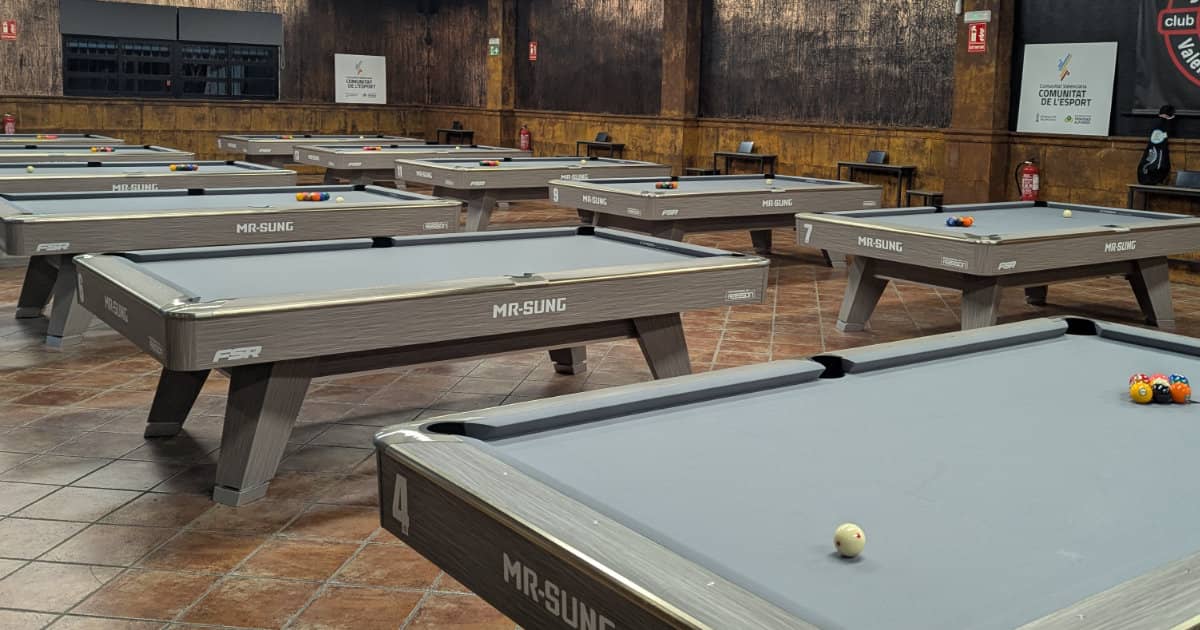
How much does it cost to open a pool hall?
The costs on this page come from US commercial real estate benchmarks, US billiard supplier pricing and US owner testimonials (2025–2026, in US dollars). Costs vary a lot by city and country.
The budget depends mostly on size, and on whether you build a full kitchen. Owners and suppliers group rooms into three broad types. All three totals include tables, fit-out, bar, licences and a cash reserve for the first months.
A smaller room keeps costs down but limits income on busy nights. A large room spreads fixed costs over more tables and more bar seats, but needs more customers every week to cover the rent.
A start-up budget for a 9-table room
To make the numbers concrete, here is a simulation for a 9-table room: five 9-ft tables and four 7-ft tables in about 4,000 sq ft (370 m²), with a full bar and a small kitchen for simple food such as pizza. The basic build uses the low end of each US price. The premium build uses the high end.
US prices in US dollars, 2025–2026, from US supplier pricing and US owner testimonials. Rent is not included, since it is paid monthly and depends entirely on your market.
| Category | Basic build | Premium build | Share (basic / premium) |
|---|---|---|---|
| Tables, cloth & accessories | $71,700 | $102,550 | 26% / 15% |
| Lighting & electrical | $16,550 | $40,300 | 6% / 6% |
| Kitchen & bar | $68,500 | $133,500 | 25% / 20% |
| Flooring, HVAC & fit-out | $53,000 | $113,000 | 19% / 17% |
| AV, sound, security & POS | $17,500 | $36,500 | 6% / 5% |
| Permits, licence, inventory & working capital | $49,500 | $250,000 | 18% / 37% |
| Total | $276,750 | $675,850 | 100% |
How this simulation is built
- Items priced per table (tables, cloth, set-up, lights, balls and cues) are multiplied by 9.
- Items that grow with the size of the room (electrical work, room lighting, HVAC, acoustics, seating, TVs, sound, cameras, opening stock, working capital) are half of the figures US owners quote for an 18-table, 8,000 sq ft room. Flooring is priced on 4,000 sq ft.
- Items that cost about the same in any room (light-control panel, POS hardware, walk-in cooler, bar equipment, hood, permits, liquor licence) are kept as they are.
- The kitchen is sized for a simple menu under a Type 2 hood, without fryers.
US owners often quote $175,000 to $350,000 for a small room of 6 to 10 tables. That range assumes a leaner set-up, such as rebuilt used tables, an existing bar and little or no kitchen. This simulation prices new equipment, a full bar and a small kitchen, so it comes out higher. The ideas in where owners save money show how to bring it down.
Where the money goes: 9-table room
| Category | Basic | Premium |
|---|---|---|
| Tables & accessories | $71,700 | $102,550 |
| Lighting & electrical | $16,550 | $40,300 |
| Kitchen & bar | $68,500 | $133,500 |
| Flooring, HVAC & fit-out | $53,000 | $113,000 |
| AV, security & POS | $17,500 | $36,500 |
| Permits, licence & working capital | $49,500 | $250,000 |
What each category includes
Here is what each line of the 9-table simulation includes, with the price for a 9-table room.
Tables and table mechanics
Tables are your core equipment. Shipping, installation and the first cloth add 15% to 25% to the list price, so budget for the whole job. Used 9-ft tables sell for about $4,000 to $6,000 and used 7-ft tables for $2,500 to $4,500.
Brands commonly recommended by US pool hall owners- 5 × 9-ft tables, new (such as Diamond Pro-Am, Rasson Victory, Brunswick Gold Crown VI): $37,500 to $52,500 ($7,500 to $10,500 each).
- 4 × 7-ft tables, new (such as Valley or Diamond Smart Table): $22,000 to $32,000 ($5,500 to $8,000 each).
- Cloth and rail cushion covering for 9 tables: $3,150 to $4,050.
- Professional set-up and levelling by a table mechanic for 9 tables: $4,050 to $6,300.
- Balls, cues, racks and care kit for 9 tables: $4,500 to $7,200.
- One motorised ball washer: $500.
Owners point out that one-piece slate tables are easier to keep level than three-piece slates, which takes less mechanic time over the years.
Lighting and light control
Shadow-free LED panels light the whole bed and are harder to hit with a cue than hanging shades. The light-control panel switches a table's light on only while its timer runs.
- Overhead LED canopy lights for 9 tables: $4,050 to $10,800.
- Electrical drops above every table position: $5,000 to $11,000.
- POS light-control relay panel: $3,500 to $8,500.
- Room and bar lighting, sconces and signs: $4,000 to $10,000.
Kitchen and bar
The exhaust hood is the biggest unknown in most budgets, and your local health and fire codes decide which one you need. A menu with fryers, griddles or charbroilers needs a Type 1 hood with grease and fire suppression, at $30,000 to $70,000. The simulation avoids that with a simple oven-based menu.
- Type 2 hood (heat and steam only) for a pizza and convection oven menu: $12,000 to $22,000.
- Kitchen equipment for a simple menu (ovens, prep tables, refrigeration, dishwashing, ice maker): $17,500 to $37,500.
- Bar counter and back wall, 20 to 25 ft (6 to 7.5 m): $12,000 to $25,000.
- Draft beer system with 8 to 10 taps: $9,000 to $12,000.
- Walk-in cooler: $10,000 to $22,000.
- Bar sinks, ice wells and glass washer: $8,000 to $15,000.
Fit-out, flooring, HVAC, acoustics and seating
A 9-ft table weighs roughly 1,000 to 1,200 lb (450 to 545 kg), so check the floor can carry the load. Busy league nights need strong air turnover, about 1 ton of cooling per 300 to 350 sq ft (28 to 33 m²). Carpet around the tables protects dropped balls and softens the noise.
- Low-pile carpet tile or LVT for about 4,000 sq ft (370 m²): $24,000 to $48,000 ($6 to $12 per sq ft installed).
- HVAC and air filtration: $17,500 to $40,000.
- Acoustic baffles and wall panels: $4,000 to $9,000.
- Raised spectator chairs and high tables: $7,500 to $16,000.
AV, security and POS
Brands commonly recommended by US pool hall owners- 6 to 10 large TVs with a switching system: $7,000 to $14,000.
- Sound system: $4,000 to $9,000.
- POS hardware (terminals, printers, handhelds, for example Toast, Clover or Square): $4,500 to $9,000.
- CCTV with 8 to 16 cameras: $2,000 to $4,500.
Licence, permits, inventory and working capital
- Liquor licence, depending heavily on location: $5,000 to $150,000.
- Architect, engineering and permit fees: $12,000 to $35,000.
- Opening stock of drinks, food, chalk and cue tips: $7,500 to $15,000.
- Working capital for the first three to six months: $25,000 to $50,000.
Where owners save money
- Rebuilt used tables. Owners buy solid-wood used frames, such as older Brunswick Gold Crowns, for $1,500 to $2,500 and fit new cushions, new cloth and a professional set-up. This can cut table costs by up to half with no loss in play.
- A phased kitchen. Start with a ventless menu (pizza ovens, convection ovens, panini presses) under a Type 2 hood. Add a Type 1 hood later, once food sales justify it.
Where owners don't cut corners
- Lighting. Poor light turns away serious players and league organisers, who bring steady weeknight business.
- Table spacing. Keep at least 5 ft (1.5 m) clear around every table edge. Squeezing in an extra table hurts the room's reputation. See space and layout.
- Light-control POS. Owners estimate that tracking table time by hand loses 8% to 15% of table revenue to hours that never reach the bill. See POS and table software.
Is opening a pool hall right for you?
Owners are open about the workload. Many report 80 to 100 hours a week in the first three years. Margins are usually too tight to hire a full management team on day one, and rooms tend to do better when the owner is there most nights.
A rule of thumb shared on owner forums is to work out what will be left after operations and rent, before you sign anything.
| Example: yearly income | $135,000 |
| Minus operating costs | − $65,000 |
| Minus lease | − $23,000 |
| Left for payroll and yourself | $47,000 |
In this example, $47,000 has to cover staff wages and your own pay. If your numbers look like that, it is a signal to rethink the size, the rent or the food and bar plan before you commit.
General information, not legal or financial advice. Build your business plan with an accountant who knows hospitality in your area.
Finding a building and signing the lease
Pool needs a lot of open floor, so rent is usually your biggest fixed cost. Owners who have lost a popular room often name rising rent as the cause.
- Look for open floor plans. Former big-box stores and supermarkets often have wide spaces with few columns, and sometimes existing kitchen services. A long, narrow, column-free room of about 4,000 sq ft (370 m²) has fitted 17 tables.
- Ask for rent stability. Aim for a multi-year term with increases capped, for example in line with the cost-of-living index.
- Check the floor and services. Floor load, ceiling height, power supply and HVAC all affect your build cost.
General information, not legal advice. Lease terms and tenant protections differ by state and country, so have a commercial property lawyer review the lease before you sign.
Licences and permits
Most profitable rooms sell alcohol, so the liquor licence is often the key step. In the US it can cost from about $5,000 to $150,000 or more. In quota states such as Florida, Pennsylvania and California, the number of licences is limited and new owners usually buy an existing one on the open market.
You will also need building and occupancy permits, health department approval for the kitchen, fire inspection for the hood and exits, and a general business licence. Some cities have extra rules for amusement venues or coin-operated games.
General information, not legal advice. Liquor and permit rules differ by state, county and country, so check with your local licensing authority early, since approval can take months.
Opening timeline, step by step
- Plan the concept and budget. Decide the size, the table mix, the food plan and how much cash you need, including the reserve.
- Find the building. Check floor space, floor load, power and parking, then negotiate the lease.
- Apply for the liquor licence and permits. Start early. These often take the longest.
- Design the room. Lay out tables with proper spacing, the bar, kitchen, restrooms and storage. See space and layout.
- Build out. Electrical drops, HVAC, flooring, acoustics, bar and kitchen.
- Order and install tables and lighting. Book an experienced table mechanic for set-up and levelling.
- Set up POS and light control. Configure table rates, see how much to charge.
- Hire and train staff. Cover service around players and your house rules. See running the room.
- Get found before the doors open. Set up your online listings and contact local leagues.
- Soft opening, then grand opening. Test service with friends and local players, then launch.
Get found from day one
A new room needs players from the first night. Set up your listings a few weeks before you open, so people searching nearby can find you.
- Google Business Profile. Add your address, hours, photos and a link to your website.
- PoolTrips. Players use it to find places to play pool. Claim your page and add your tables, photos and hours.
- Local leagues. Contact league organisers in your area about hosting a weeknight division. See leagues and tournaments.
For a full plan, read how to market your pool hall.
Show players your table count, sizes and brands, add your hours and up to 10 photos, and set a "Book a table" button. Claiming is a one-time $79 per venue.
More guides for pool hall owners
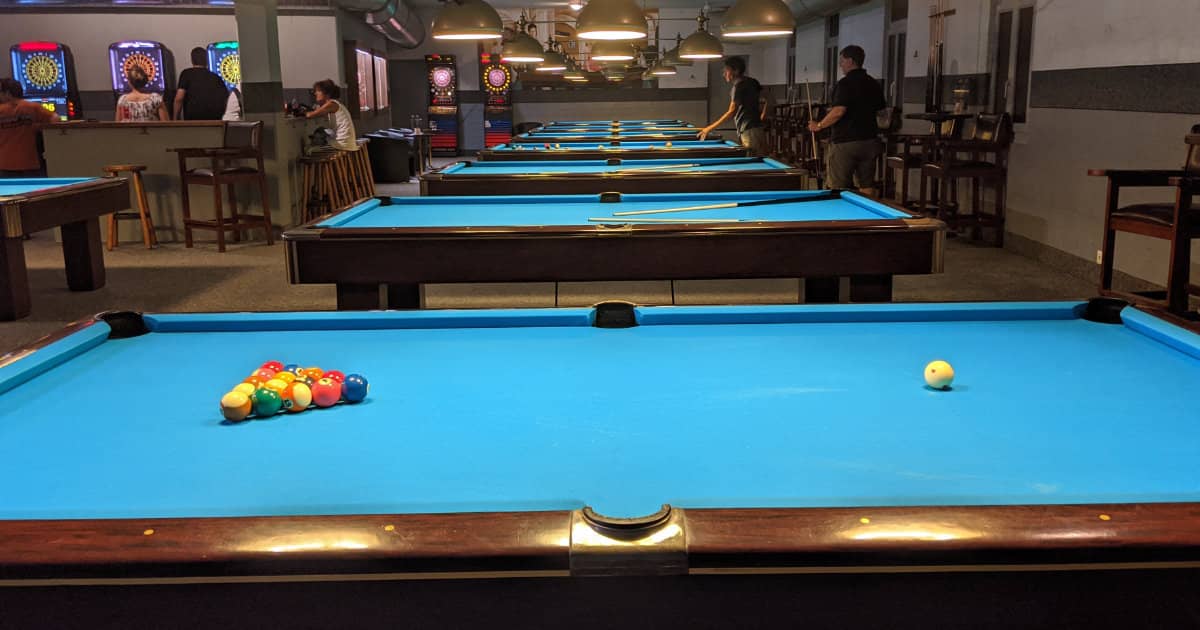 Pool hall space & layoutHow many tables fit your room.
 How pool halls make moneyBar, food, tables and extras.
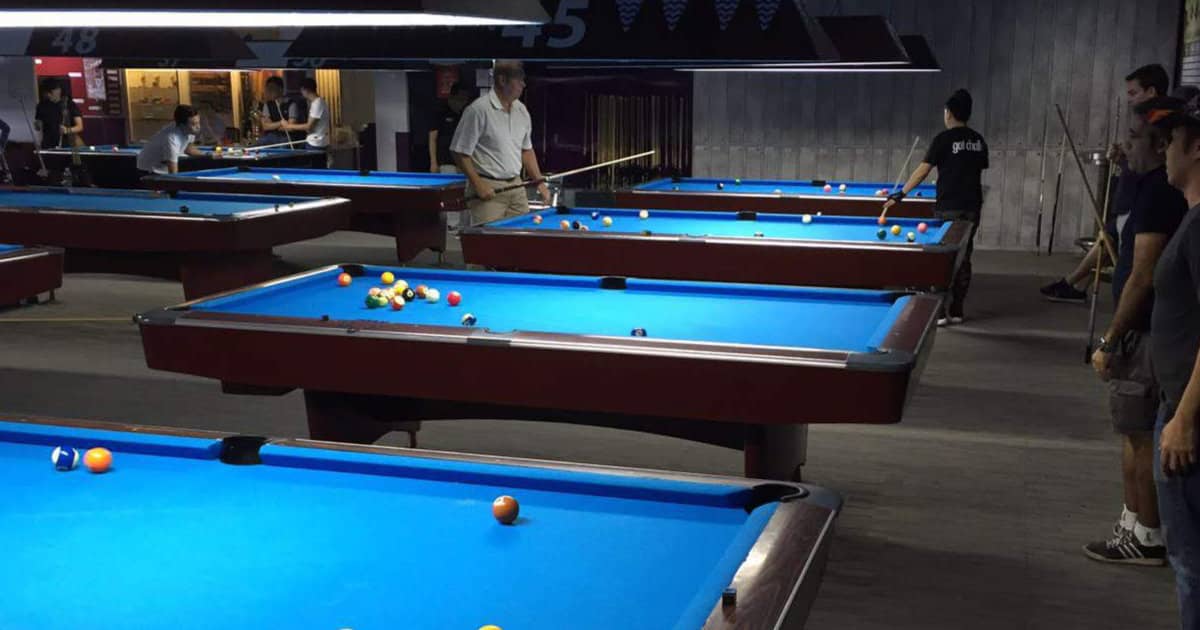 POS & table-time softwareTimers and light control.
Frequently asked questions
How much does it cost to open a pool hall?
In the US, owners and suppliers estimate $175,000 to $350,000 for a small 6 to 10 table room, $550,000 to $950,000 for a mid-size 12 to 18 table room, and $1.2 million to $2.2 million or more for an upscale lounge with 20+ tables.
How much does a commercial pool table cost?
A new commercial 9-ft table costs about $7,500 to $10,500, and a 7-ft about $5,500 to $8,000. Used tables cost much less. Add 15% to 25% for shipping, installation and the first cloth.
How much space do I need for a pool hall?
Plan about 300 to 350 sq ft (28 to 33 m²) per 9-ft table including seating. A 16 to 20 table room needs 5,000 to 6,000 sq ft for the playing area and 7,000 to 8,000 sq ft overall. Try the calculator in space and layout.
Do I need a liquor licence to open a pool hall?
The law doesn't always require one. Still, most owners say a room without a bar finds it very hard to cover its costs. Licence costs and rules vary widely by state and country, so check with your local authority.
Do I need a full kitchen?
Many owners start with a simple menu, such as pizza and snacks, under a Type 2 hood, which costs far less than a full Type 1 hood. You can expand once food sales grow.
How long does it take to open a pool hall?
It depends mostly on the liquor licence, permits and build-out. Licensing alone can take months in some areas, so start applications as soon as you have a building.