
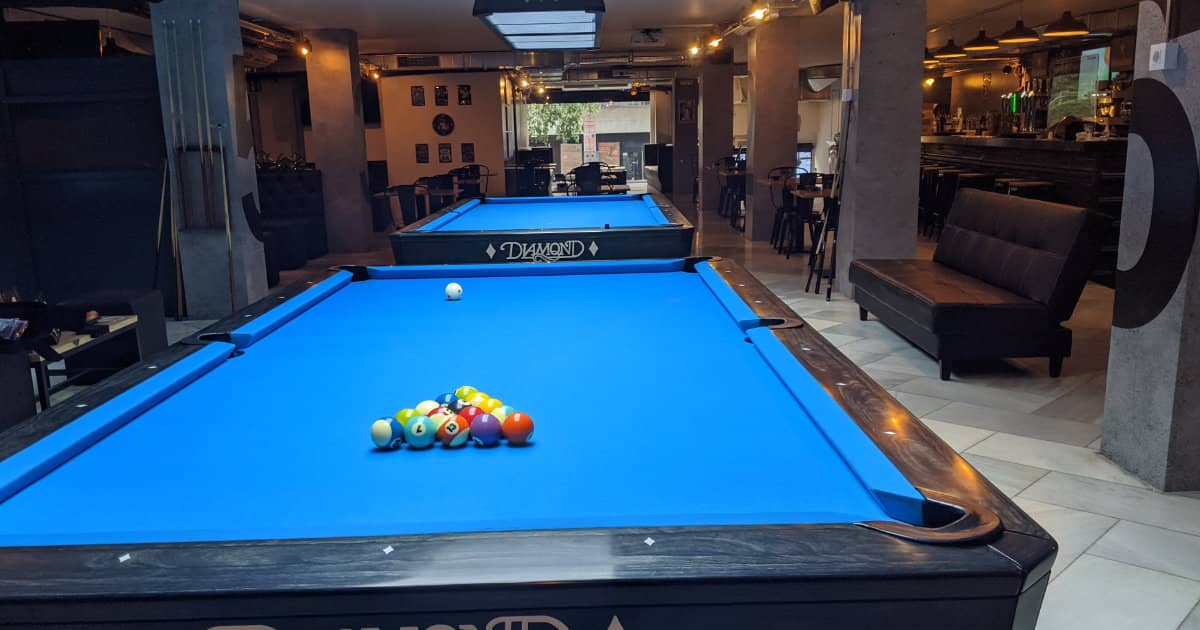
The three pricing models
Most pool halls use one of three approaches, or a mix of them depending on the day and time.
Prices on this page come from testimonials of US pool hall owners (2025–2026, in US dollars). Local rates vary widely by city and country, so check what rooms near you charge.
1. Flat rate per table
One hourly price for the table, however many people play. US owners report rates around $10–$15 an hour. It's simple to bill and easy to explain. Groups like it because the cost per person falls as more friends join, and groups are often the guests who order food and rounds of drinks. The downside is for solo players, who pay the full rate on their own and may practise somewhere cheaper.
2. Per person, on a scale
The price rises with the number of players. A typical example: $5 an hour for one player, $10 for two and $15–$17 for four. A full table earns more, and many owners feel it reflects the extra wear, cleaning and footfall of a bigger group. The challenge is perception. A group of four may compare your rate with a bar that has a coin-operated table, so make sure the evening feels good value.
3. Memberships and daytime flat rates
Daytime hours are often the quietest. A flat daytime pass, such as $10 to play from 11 AM to 6 PM, or a monthly unlimited membership at around $150, brings regular players in when tables would otherwise sit empty. These players often make your room their home base, which builds its reputation with other players. The risk is a busy Friday night with members on tables while paying groups wait, so set clear limits (see the next section).
| Model | How it works | Best for | Watch out for |
|---|---|---|---|
| Flat rate per table | One hourly price per table, e.g. $10–$15/h | Groups and evenings; simple billing | Solo players pay the full rate alone |
| Per person scale | Price rises with players, e.g. $5 / $10 / $15–$17 for 1 / 2 / 4 | Solo practice; earning more from full tables | Groups may find it expensive |
| Membership or day pass | Fixed fee, e.g. $10 for 11 AM–6 PM, or ~$150/month unlimited | Filling quiet weekday hours; building regulars | Members using tables at peak times |
Example only, built from US owner prices: $12/h per table; $5 / $10 / $16 an hour for 1 / 2 / 4 players; a $10 daytime pass per person.
Example: cost per person for a 2-hour daytime session
Peak vs off-peak: protect Friday and Saturday nights
Your weekend nights, roughly 9 PM to 2 AM, are the hours when every table could be full. Daytime and early weekdays are the opposite. Many rooms price the two differently: a standard or slightly higher evening rate, and cheaper daytime specials to bring players in when the room is quiet.
Owners who sell memberships or day passes usually add one of two rules so busy nights stay available to paying groups:
- Memberships and flat-rate passes are not valid on Friday and Saturday evenings.
- When the room is nearly full, solo members share a table with another player.
Put the rule in writing at sign-up and on your rate card. Members accept limits far more easily when they know them from day one.
General information, not legal or financial advice. Rules on membership contracts, recurring payments and how prices must be displayed differ by state and country, so check with a local professional before launching a membership.
Who counts at a table
With per-person pricing, the question of who is counted comes up every night. A friend who sits and watches, a player who joins for one rack, a child with their parents. Decide your answer in advance and keep it consistent.
The simplest approach is a clear, posted policy, for example "everyone playing is counted". Print it on the rate card and have staff explain it when they open the table. A posted rule takes the awkwardness out of the conversation for guests and staff alike.
A table-time POS helps here too, because staff set the player count when they start the timer and can update it if someone joins. Our POS and table software guide explains how.
Show prices clearly
Guests should know what they will pay before they rack the first game. A rate card at the counter, on the wall and on your website avoids surprises at the end of the night. Include the hourly rates, how players are counted, the daytime specials, the membership rules and any cue rental fee.
Table rates
Prices per table, per hour
Daytime · Mon–Fri, 11 AM–6 PM
Evenings & weekends
Membership
Everyone playing is counted. Memberships and day passes are not valid Friday and Saturday after 6 PM. When the room is busy, solo members may be asked to share a table.
Claim your page to add your rates to your 300-character description and a custom button linking straight to your booking system, so players can reserve before they arrive.
Table-revenue calculator
Enter your own numbers to see what table time could bring in each month. Occupancy is the share of your open hours that tables are actually in use, averaged across the day. Busy evenings and quiet afternoons balance out, so most rooms sit well below 100%.
Average across all your price bands.
Share of open hours a table is in use.
Table time covers 72% of your rent. In most rooms the bar and food make up the rest.
Estimate based on US owner figures. It covers table time only, before staff, utilities, insurance, cloth and other costs.
If table time covers only part of your rent, you're in good company. Most US owners rely on the bar, food and small extras for the rest, as explained in How Pool Halls Make Money. To test different table counts for your space, try the capacity calculator.
Local prices vary widely
The rates on this page are US examples. Prices depend on your city, your rent, the quality of your tables and what the rooms nearby charge. Visit a few local venues, look at their rate cards and decide where you want to sit: the friendly neighbourhood room, or the premium hall with 9-ft tournament tables and perfect lighting.
A few extra busy hours a week can matter more than a price rise. Promote ($29/month) shows your venue above non-promoted places in every PoolTrips search it appears in.
More guides for pool hall owners
 How Pool Halls Make MoneyBar, food and extras that cover the rest of the rent.
 Pool Hall POS & Table-Time SoftwareTimers, player counts and light control.
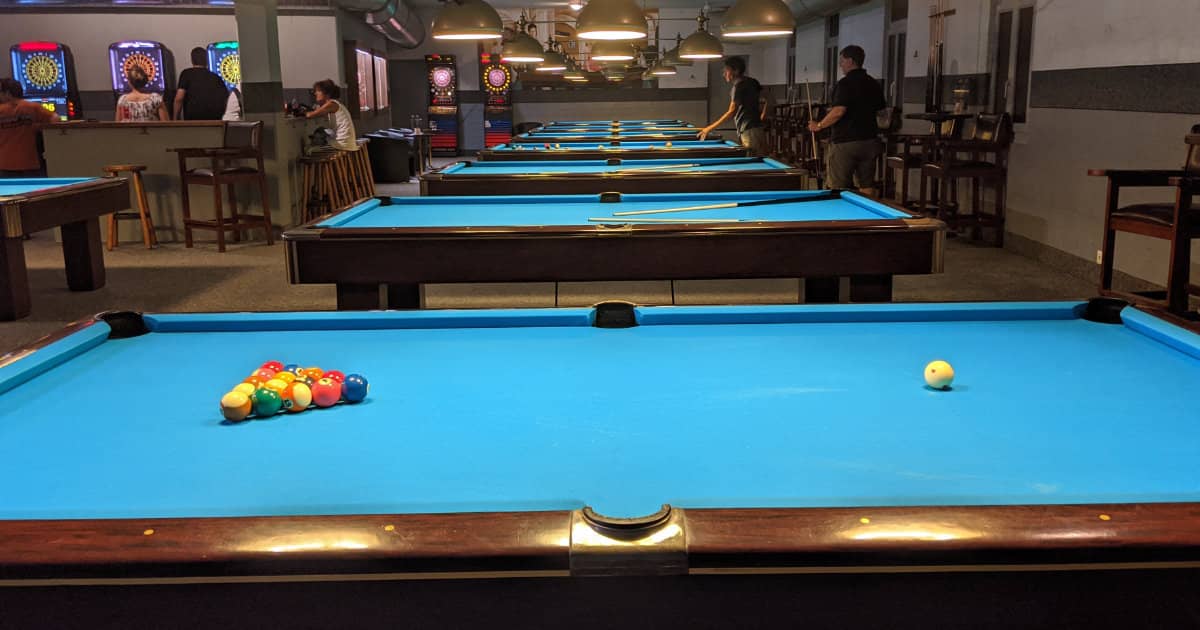 Pool Hall Space & LayoutHow many tables fit, with a capacity calculator.
Frequently asked questions
How much do pool halls charge per hour?
US owners report flat table rates of about $10–$15 an hour. Rooms that charge per person often start around $5 an hour for one player and reach $15–$17 for four. Prices vary a lot by city and country.
Should I charge per person or per table?
Per table is simpler and suits groups, who often spend more at the bar. Per person earns more from full tables and is fairer to solo players. Many rooms mix them: a per-person scale in the daytime and a flat table rate in the evening.
How much should a pool hall membership cost?
One US example is about $150 a month for unlimited play, with daytime passes around $10 from 11 AM to 6 PM. Most owners exclude Friday and Saturday evenings, or ask solo members to share tables when the room is busy.
Do people watching a game count as players?
That's your call. Pick a clear rule, such as "everyone playing is counted", print it on your rate card and have staff mention it when they open the table.
How do I work out how much my tables will earn?
Multiply tables × average hourly rate × hours open × days open × average occupancy. Our table-revenue calculator above does this for you, and compares the result with your rent.