
Heyball at a glance
| Table sizes | 7, 8, 9 ft (9 ft for competition) |
| Playing surface (9 ft) | 2.54 × 1.27 m |
| Pockets | 6, very tight with rounded jaws |
| Balls | 15 numbered balls (solids and stripes) + white cue ball |
| Ball size | 57.15 mm (2¼ in), same as American pool |
| Main games | Chinese 8-ball (heyball), Golden 9 |
| Governing body | Chinese Billiards & Snooker Association (CBSA) |
How the game works
Chinese 8-ball is played much like American 8-ball: after the break, one player takes the solids, the other the stripes, and the first to clear their group and then pot the 8-ball wins. What changes everything is the table. With pockets barely wider than the ball, shots that would drop easily in American pool rattle out, so safety play and cue-ball control matter enormously.
Golden 9 is a 9-ball game played on the same tight-pocket table, with its own rules and a fast-growing tournament circuit in China.
The table
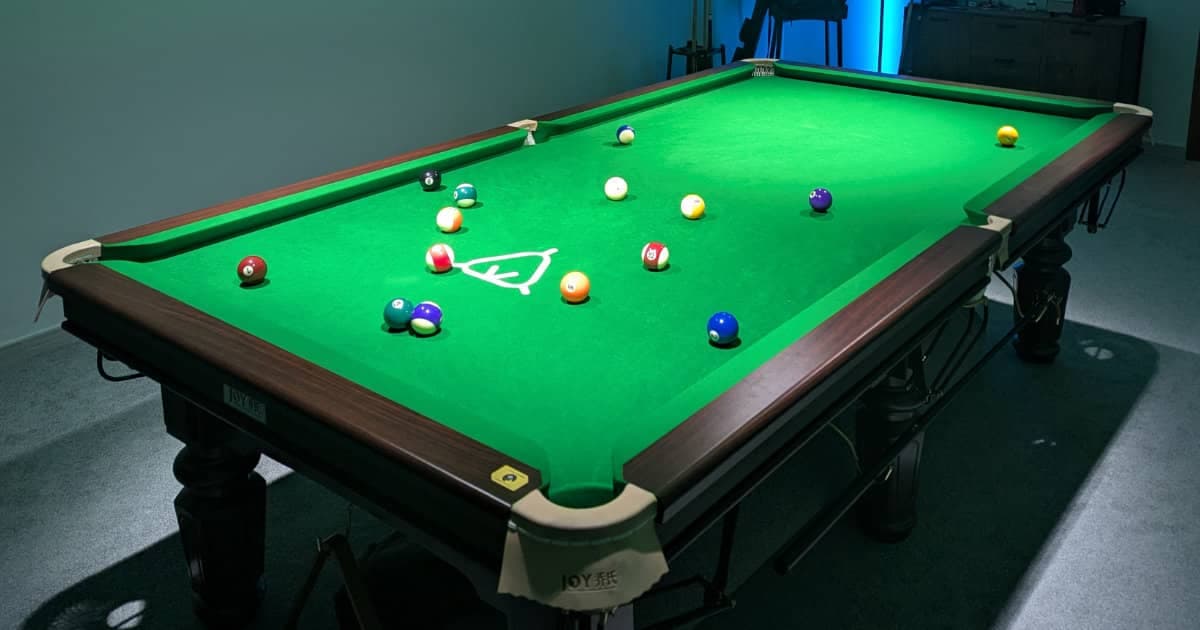
A heyball table is the size of a 9-foot American pool table, but its pockets and cushions are shaped like those of an English pool or snooker table: narrow openings and rounded jaws. The cloth is fast, and many clubs keep their tables in tournament condition.
Smaller 7 and 8 ft heyball tables are also used in some clubs and bars. A 9 ft table needs a room of about 6.1 × 4.8 m (20 × 16 ft) with standard cues and room for your backswing. See all sizes in our table sizes & room size guide.
Equipment
- Cue: similar to an American pool cue, with a slightly smaller tip, often around 9–12 mm.
- Balls: 57.15 mm numbered pool balls, solids and stripes.
- Rest: allowed, as in English pool and snooker.
Where heyball is played
Heyball is played across China, where you'll find clubs in almost every town and city, often open late into the night. It's spreading through Southeast Asia and has attracted many top players from English pool, snooker and American pool, drawn by its prize money.
The professional scene
Major events such as the JOY Cup World Heyball Masters in Qinhuangdao have made heyball a serious professional sport, with large prize funds and international fields. The Duya Golden 9-ball league is also growing rapidly across China.
Amateur play
Club tournaments and city leagues are common across China, and many clubs run regular open events.
Famous players
Chinese stars such as Zheng Yubo and Chu Bingjie have dominated the heyball scene, alongside international players crossing over from English and American pool, including several British players known for their tight-pocket skills, such as Gareth Potts, Kelly Fisher and Jack Whelan.
A short history
Chinese 8-ball developed in China from the 1980s and 1990s as pool spread through the country. Tables were adapted with tighter pockets, and by the 2010s the game had its own national association, professional tour and international events.
Where to play heyball near you
We have 6 venues with heyball tables. Find one near you now.
Discover other table types
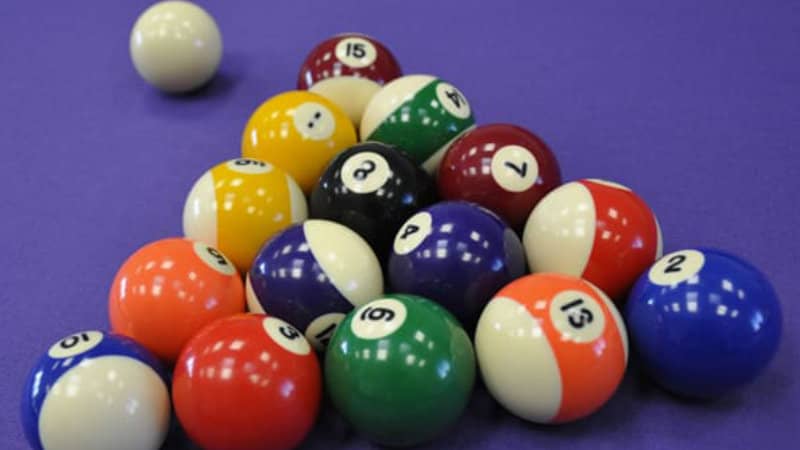 American poolsame balls, bigger pockets.
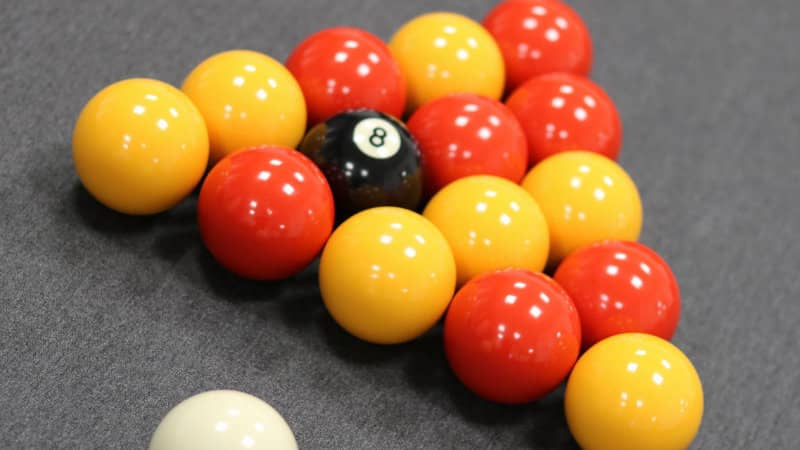 English poolsimilar pockets, smaller table.
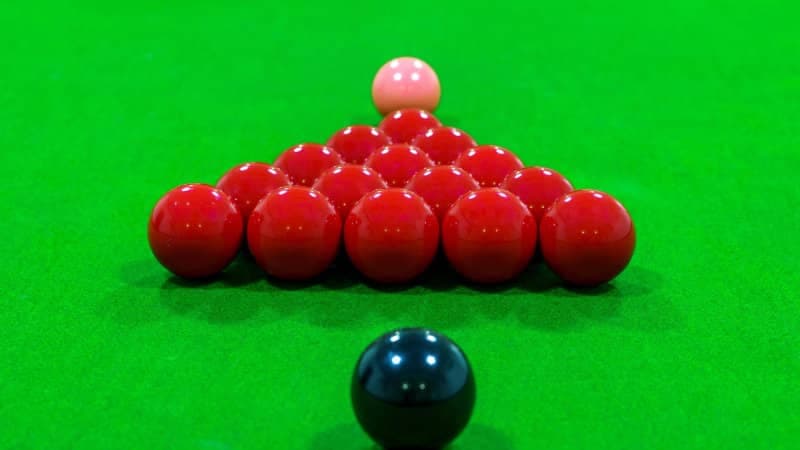 Snookerthe other big cue sport in China.
Frequently asked questions
What is heyball?
Heyball is the Chinese version of 8-ball pool, played with American-style numbered balls on a table with tight, English-style pockets.
Why is it called heyball?
The name comes from hēi bā (黑八), Chinese for "black eight", after the 8-ball that decides each frame.
Is heyball harder than American pool?
Most players think so. The pockets are much tighter, so shots have to be more accurate and the cue ball must be controlled more carefully.
What is Golden 9?
A 9-ball game played on a heyball table, with its own rules and tournaments in China.