
Snooker formats at a glance
All four formats use the same table, the same balls and the same basic idea. What changes is the number of reds, the clock and the size of the top prize.
| Format | Reds | Maximum break | Clock | Fouls | Typical match |
|---|---|---|---|---|---|
| Snooker Most common | 15 | 147 | None in most events | 4 to 7 points, opponent plays from where the balls lie | Best of 7 to best of 35 frames |
| 6-Reds | 6 | 75 | None in most events | Same as snooker | Short races, e.g. best of 9 or 11 |
| Shoot Out | 15 | 147 | 10-minute frame, 15 then 10 s per shot | Ball in hand anywhere; time fouls 5 points min. | One frame, sudden death |
| Golden Ball | 15 + gold | 167 | None | Same as snooker | Short best-of matches |
Rules common to all snooker games
The table and the balls
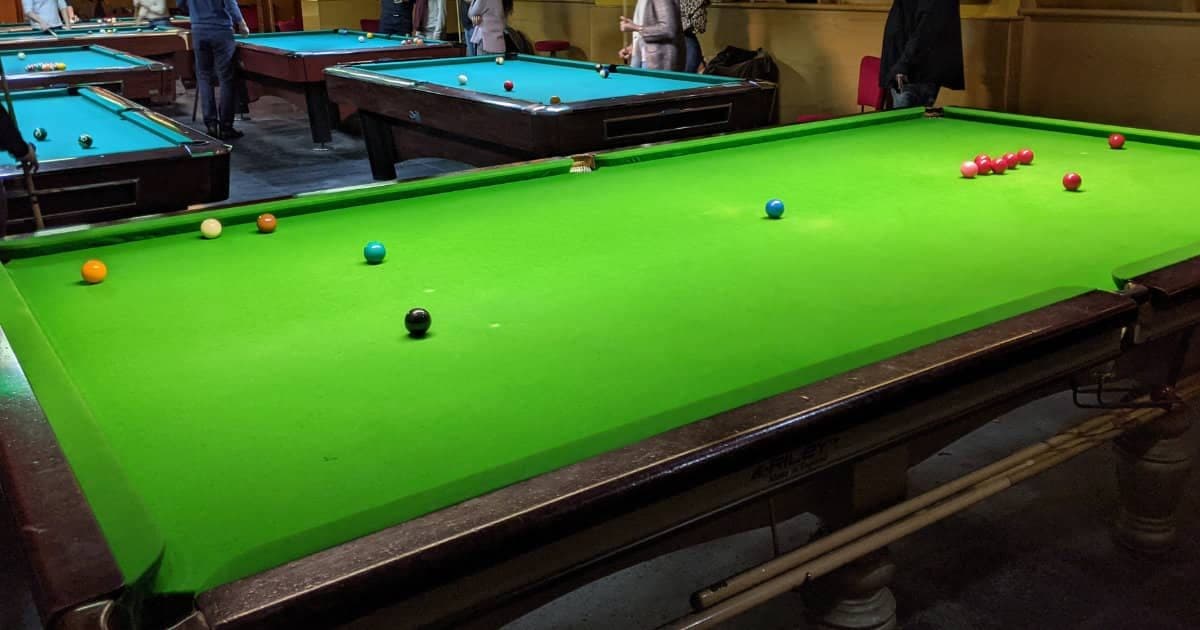
A full-size snooker table has a playing area of 3,569 × 1,778 mm (11 ft 8½ in × 5 ft 10 in), so people call it a 12 ft table. It has six pockets, which are tighter than on a pool table, and a cloth with a nap that affects how the balls roll.
The baulk line runs across the table 737 mm (29 in) from the bottom cushion. The area behind it is called baulk. On the baulk line sits the D, a half circle with a radius of 292 mm (11½ in). The yellow, brown and green go on the baulk line, the blue on the centre spot, the pink halfway between the blue and the top cushion, and the black 324 mm (12¾ in) from the top cushion. The 15 reds form a tight triangle with the front red as close to the pink as possible without touching it.
All balls are 52.5 mm in diameter. Each red is worth 1 point, and the colours are worth 2 to 7.
The ball on
The ball on is the ball you are allowed to hit first. Every shot must strike a ball on before anything else. While reds remain, any red is on. After you pot a red, you nominate (choose) a colour, and that colour is on for your next shot. A referee may ask you which colour you are playing, and you must answer.
A break is the total you score in one visit to the table. Your turn ends when you fail to pot a ball on or commit a foul. A colour you pot while reds are still on the table is re-spotted. If its own spot is taken, it goes on the highest-value free spot.
Fouls and penalties
Fouls never score for you. Every foul gives your opponent at least 4 points, or more if a higher-value ball is involved, up to 7 for the black. Your turn ends, and your opponent chooses whether to play from where the balls stopped or to make you play again.
- Missing the ball on, or hitting a different ball first.
- Potting a ball that is not on, or potting the white (an in-off).
- Touching any ball with your hand, clothes or cue.
- Playing with no foot on the floor, or before the balls have stopped and colours are back on their spots.
- Playing two reds in a row, or striking a red as the cue ball.
Two more calls come up all the time on TV.
- Free ball: after a foul, if you cannot hit both edges of every ball on in a straight line (you are snookered), the referee calls a free ball. You can nominate any ball as if it were the ball on. If you pot it, it scores the same as the ball on, and a potted colour goes back on its spot.
- Foul and a miss: if the referee decides you did not make a good enough attempt to hit the ball on, your opponent can have the balls put back where they were and make you play the shot again. If you could see the ball on clearly and keep missing it, the referee warns you, and one more miss loses the frame.
A "snooker" is a shot that leaves the white blocked from the ball on. Players need snookers when they trail by more points than are left on the table, since only fouls can then close the gap.
Snooker (15 reds)
Setup
Before each frame the referee places the 15 reds in the triangle and the six colours on their spots, as in the table diagram above. The front red sits on the centre line, as close to the pink as possible, and the back row is parallel to the top cushion.
The break-off
The first shot of a frame is the break-off. You have the cue ball in hand, which means you can place it anywhere on or inside the lines of the D. You can play in any direction, but you must hit a red first. Players take turns breaking off from one frame to the next.
Most professionals play a safe break-off. The white clips the side of the triangle, comes off the top and side cushions, and returns to baulk. Your opponent is left a long way from the loose reds.
Taking turns
You stay at the table for as long as you keep potting balls on. You do not have to call the pocket. What counts is that you hit the ball on first and that it, or another legal ball, goes down. If you pot more than one red in the same shot, each one scores. After a red, nominate your colour; if the colour you pot is not the one you nominated, it is a foul.
When you fail to pot, or you foul, your opponent comes to the table. When you cannot pot, you can play safe: hit the ball on and leave the white somewhere awkward for your opponent.
Scoring and winning
Once the last red and its colour have gone, the colours are potted in order: yellow, green, brown, blue, pink, black. In this last stage, potted colours stay off the table. The frame ends when the black goes down or someone fouls on it. The player with more points wins the frame. Matches are played as the best of a set number of frames.
- The highest possible break is the maximum, or 147: every red with the black, then all the colours.
- Many frames end before the black. A player can concede when they cannot win, even with snookers.
- If the scores are level after the black, the referee re-spots the black. The players draw lots (usually a coin toss) to decide who plays from hand in the D, and the next pot or foul wins the frame.
Common fouls
- Going in-off (potting the white): at least 4 points.
- Hitting the wrong colour first after nominating: 4 points or the value of the higher ball involved.
- Potting a red and a colour in the same shot: a foul, valued on the colour.
- Touching a ball while reaching across the table: at least 4 points.
- A push shot, where the tip stays on the white when it hits a ball it is touching or very close to.
League and house variations
The WPBSA rules are used in professional, amateur and most league snooker worldwide. The usual differences are local.
- Club and league matches often play without a referee, so players call their own fouls and re-spot their colours.
- Some leagues scrap or cap the foul-and-a-miss rule for amateur players, or play shorter frame races.
- Smaller tables (6, 8 or 10 ft) are common in homes and pubs, with the same rules and smaller spots.
- Handicap leagues give the weaker player a points start in each frame.
6-Reds snooker
6-Reds uses the same table and colours with only six reds, so frames take a fraction of the time. The highest break is 75. It has its own world championship and is played at the Asian Indoor and Martial Arts Games.
The standard rules apply, with two changes in the WPBSA rulebook.
- After you pot a red, you must not leave your opponent snookered behind the colour you nominated. Doing so is a foul.
- Foul-and-a-miss calls are capped at five in a row. After the fourth, the referee warns the player. After a fifth, the opponent can play from where the balls lie, make the offender play again, or place the cue ball anywhere on the table.
Snooker Shoot Out
The Shoot Out is a one-frame race against the clock with full 15-red set-ups. It is the fastest format in professional snooker. The WPBSA rulebook sets out its own competition rules.
The clock
Each match lasts no more than 10 minutes. In the first five minutes you have 15 seconds to play each shot, and in the last five you have 10 seconds. A late shot is a time foul.
How it differs from standard snooker
- Players lag for the break. Both play a white from the baulk line up to the top cushion and back, and the one that stops nearer the bottom cushion wins the choice.
- Every shot must pot a ball or send a ball to a cushion. If not, it is a foul.
- Time fouls and no-cushion fouls cost at least 5 points. After any foul, the incoming player has ball in hand anywhere on the table.
- There is no foul and a miss, and you cannot ask your opponent to play again.
- If the scores are level when time runs out, a blue ball shoot-out decides it. The blue goes on its spot, players take turns from the D, and the first to pot more blues from the same number of attempts wins.
Golden Ball snooker
World Snooker Tour (WST) introduced the Golden Ball at its events in Riyadh, Saudi Arabia, starting with the World Masters of Snooker in March 2024. The rest of the frame follows standard snooker rules.
- The gold ball is worth 20 points and goes on the table at the start of every frame.
- It can only be potted after a 147. Potting it then turns the break into a 167.
- As soon as a maximum is no longer possible, the referee removes it for the rest of the frame.
- Potting the gold early or hitting it first is a foul: 4 points, or the value of the ball on if higher.
At the 2024 and 2025 Riyadh Season Snooker Championships, the first player to make a 167 was offered a US$1,000,000 bonus.
Official rules and governing bodies
These are the official sources for the rules summarised on this page.
Where to play snooker near you
We have 85 venues with snooker tables. Find one near you now.
Discover other billiard variants
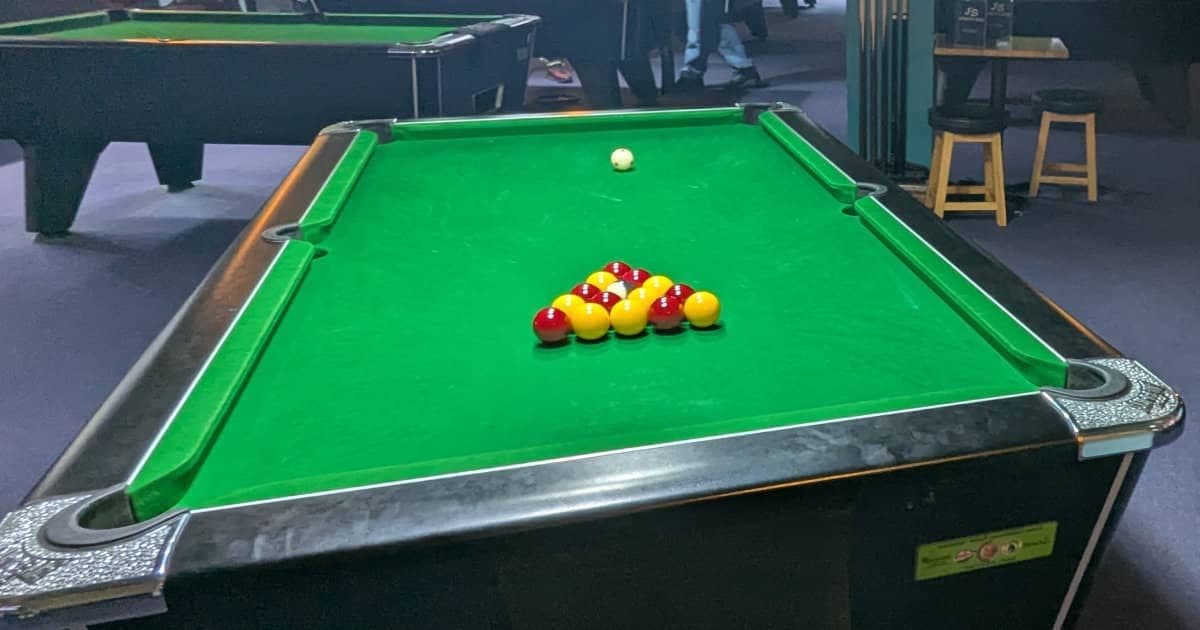 English pool rulesReds and yellows on a 7 ft table, with baulk and the D.
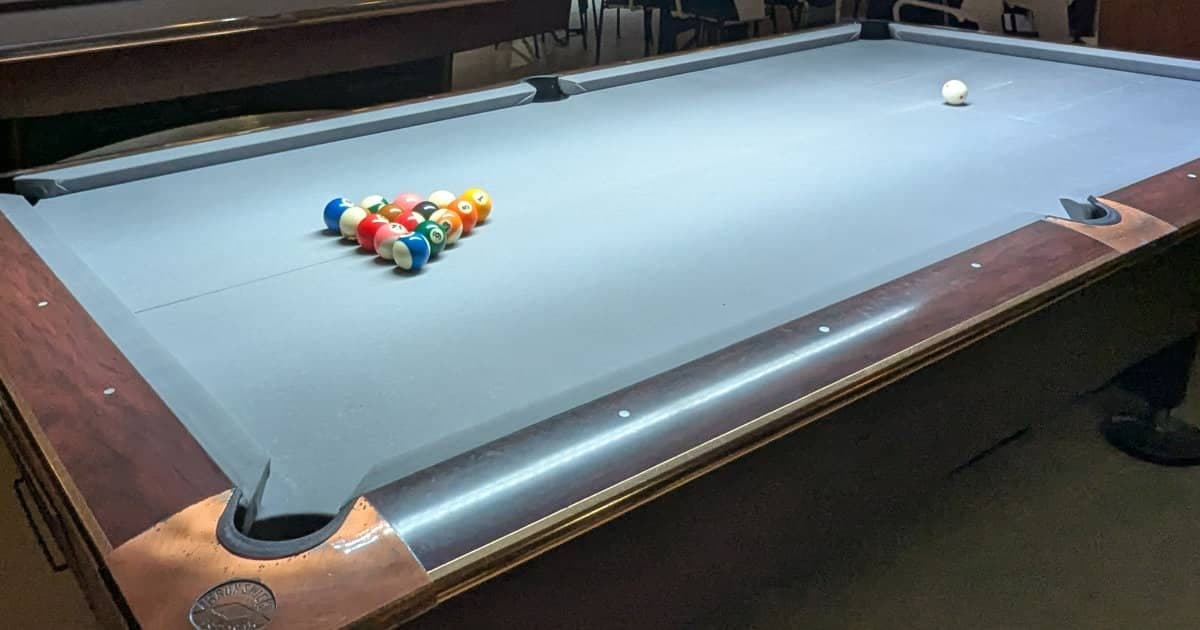 American pool rules8-ball, 9-ball, 10-ball and straight pool.
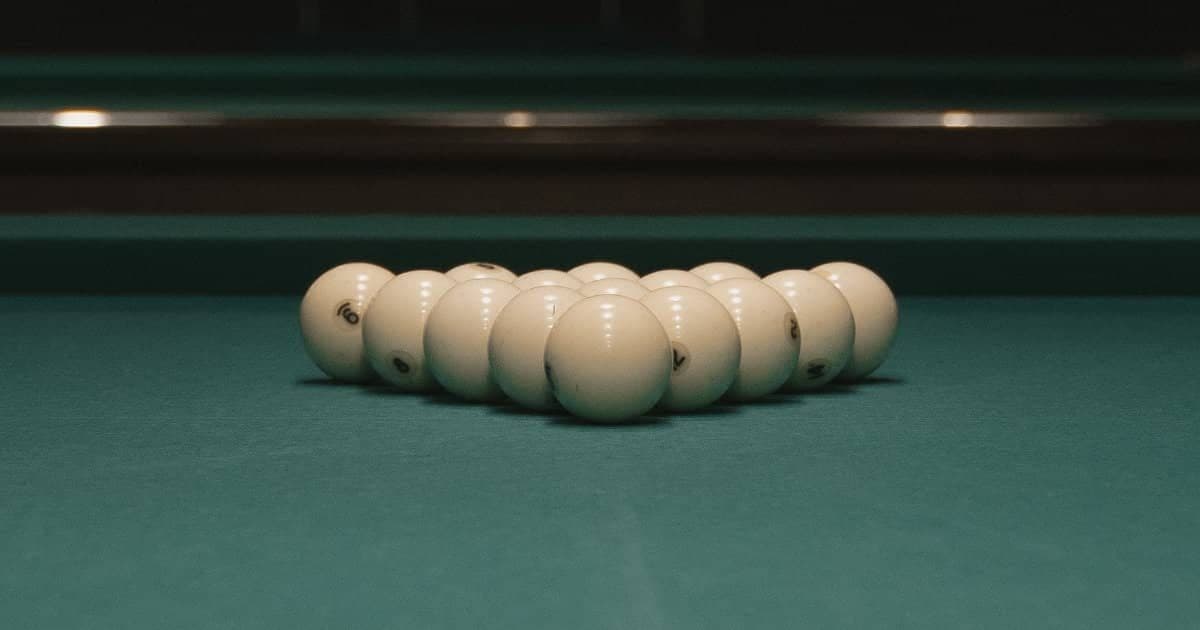 Russian pyramid rulesAnother 12 ft game, with white balls and tight pockets.
Frequently asked questions
Can you score more than 147 in snooker?
Yes. If your opponent fouls and leaves you a free ball while all 15 reds are still on, the free ball counts as an extra red, so the theoretical highest break is 155. Without that, 147 is the limit.
Do you have to call your shot in snooker?
You never call a pocket. You only say which colour you are going for after potting a red, and only when it is not obvious or the referee asks.
What happens if you pot the white in snooker?
Your opponent gets the penalty points and plays with the white in hand from the D. Unlike pool, there is no ball in hand anywhere on the table, except in the Shoot Out.
How long does a frame of snooker take?
A professional frame often lasts around 15 to 30 minutes. Amateur frames often take longer, which is why 6-Reds and the timed Shoot Out are popular for quick games.
Can I play snooker on a pool table?
You can play with a smaller snooker set on a 7 ft table, but it is a very different game. For real snooker, look for a club with full-size tables in our snooker venues.