
Snooker at a glance
| Table sizes | 9, 10, 12 ft (12 × 6 ft is full size) |
| Playing surface (12 ft) | 11 ft 8½ in × 5 ft 10 in (3,569 × 1,778 mm) |
| Pockets | 6, narrow with rounded jaws |
| Balls | 15 reds, 6 colours (yellow, green, brown, blue, pink, black) + white cue ball |
| Ball size | 52.5 mm |
| Highest possible break | 147 (155 with a free ball) |
| Governing bodies | World Professional Billiards & Snooker Association (WPBSA); amateur game: World Snooker Federation (WSF) and IBSF |
How the game works
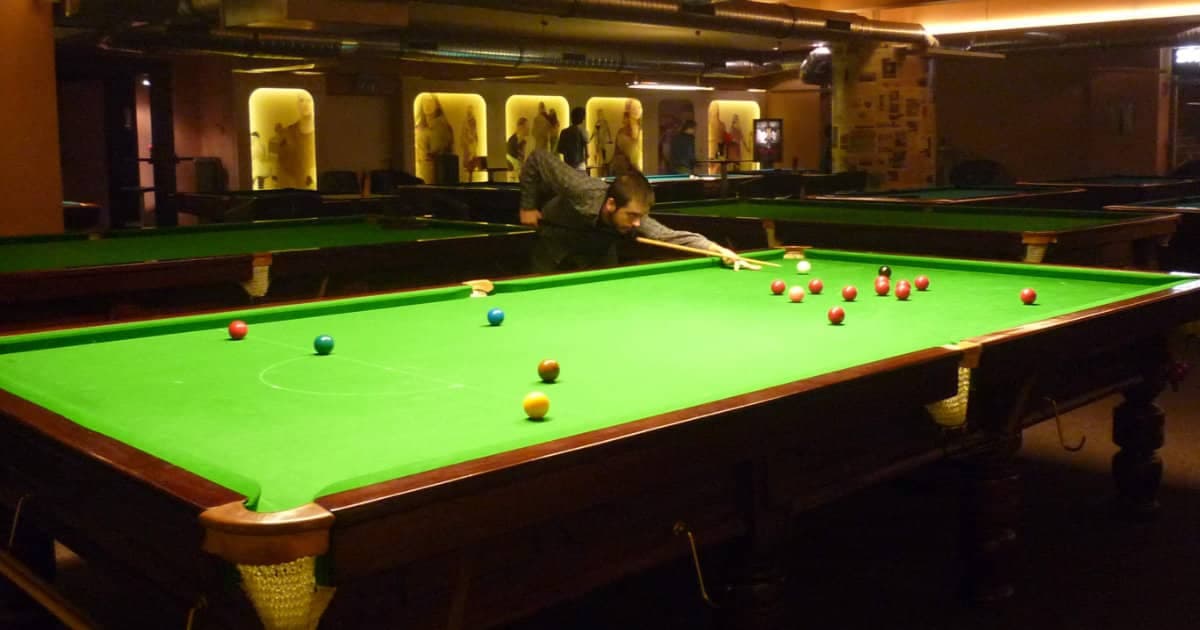
Each frame starts with 15 reds racked in a triangle and the six colours on their own spots. Players take turns at the table:
- Pot a red (1 point), then pot a colour of your choice: yellow 2, green 3, brown 4, blue 5, pink 6, black 7.
- The colour comes back to its spot, and you go for another red. Keep alternating to build your break.
- Once all the reds are gone, the colours are potted in order, from yellow to black.
Miss and your opponent comes to the table. Fouls, such as hitting the wrong ball first or potting the white, give penalty points to your opponent (at least 4). The player with the most points when the frame ends wins it, and matches are played over a set number of frames.
A snooker is when the cue ball is left in a position where your opponent can't hit the ball they need directly. Laying snookers to force fouls is a key part of the game.
There are also faster formats, such as 6-Reds snooker and the Snooker Shoot Out, a single timed frame with a shot clock.
The table
A full-size snooker table is 12 × 6 feet, with a playing surface of about 3.57 × 1.78 m. It's heavy, with a slate bed made of several pieces, and covered in a fine napped cloth that affects how the ball rolls.
The pockets are much tighter than on an American pool table, and rounded, so balls must be struck precisely to drop. Many clubs and homes also use smaller 10-foot or 9-foot snooker tables.
A full-size table needs a room of about 7.1 × 5.3 m (23½ × 17½ ft) to play every shot with a full-length cue and room for your backswing. See how it compares with other tables in our table sizes & room size guide.
Equipment
- Cue: one- or two-piece, about 57–58 in (145–147 cm), with a small 9–10 mm tip and usually made of ash.
- Balls: 52.5 mm, smaller than American pool balls.
- Rests: the rest, spider, swan and extended cues help with long or awkward shots.
- Chalk: and a lot of it.
Where snooker is played
Snooker was born in the British Empire and remains huge in the United Kingdom and Ireland. Today, China has the largest number of players and fans, with thousands of clubs and many top professionals. It's also popular in Thailand, Hong Kong, Belgium, Germany, Australia, India and the Middle East.
The professional scene
The pro game is run by the World Snooker Tour under the WPBSA. The biggest event is the World Snooker Championship, held every spring at the Crucible Theatre in Sheffield since 1977. The UK Championship and the Masters complete snooker's "Triple Crown".
Amateur snooker
Clubs across the UK, Ireland, Europe and Asia run local leagues and amateur tournaments, from club handicaps to national championships.
Famous players and events
From Joe Davis and Steve Davis to Stephen Hendry, Ronnie O'Sullivan, Judd Trump and Ding Junhui, snooker has produced some of the most famous names in cue sports. Ronnie O'Sullivan's 5 minute 8 second maximum break in 1997 remains one of its most famous moments.
A short history
Snooker is usually said to have been invented in 1875 by British army officers stationed in Jabalpur, India, who added coloured balls to existing billiards games. It became a professional sport in the 1920s, and colour television in the 1970s and 80s turned it into one of Britain's most-watched sports.
Where to play snooker near you
We have 87 venues with snooker tables. Find one near you now.
Discover other table types
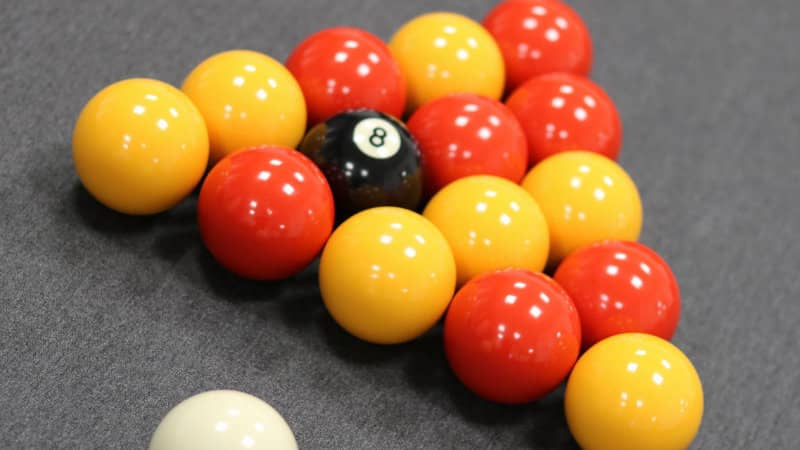 English poola quicker pub game, also from Britain.
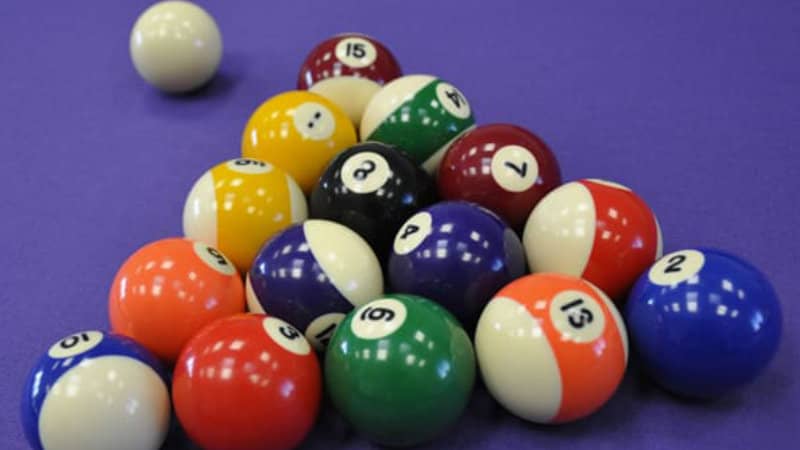 American poolsmaller table, bigger pockets.
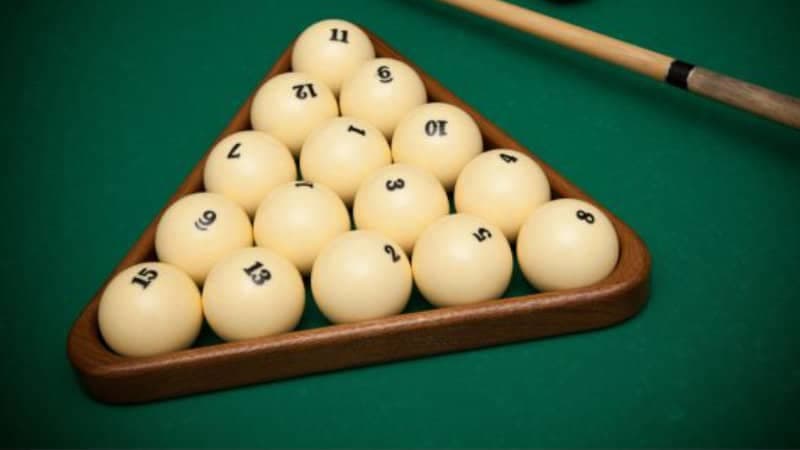 Russian pyramidanother big-table game with very tight pockets.
Frequently asked questions
How big is a snooker table?
A full-size snooker table is 12 × 6 ft, with a playing surface of 3,569 × 1,778 mm (11 ft 8½ in × 5 ft 10 in).
What is a 147 in snooker?
A maximum break: potting all 15 reds, each followed by the black, then all six colours, for 147 points in a single visit.
What's the difference between snooker and pool?
Snooker uses a much bigger table, smaller balls, tighter pockets and 22 balls instead of 16, and frames are won on points rather than by potting a final ball.
Can you play snooker on a pool table?
Not properly. The table, balls and pockets are all different sizes. Some smaller "snooker" tables are sold for homes, but full-size 12 ft tables are needed for official play.
How long does a frame of snooker last?
Usually 15 to 30 minutes for professionals, longer for amateurs. Formats like the Shoot Out limit a frame to 10 minutes.